
5 Reasons Everyone MUST Learn No-Code in 2024
Discover how no-code tools can make creating, improving, and working together easier and faster for everyone.


We are well into 2024 already, and I see one trend growing like crazy - no-code tools.
In this issue, I want to share 5 reasons why you should be (scratch that, must be) learning no-code tools this year.
The whole no-code craze started a couple of years ago, even though such tools have existed for ages (e.g., WordPress is essentially a no-code web builder). However, with the advancements in their capabilities and the vast potential AI has brought for non-technical people to build small creative apps, the so-called No-Code Movement is now a fact. Sprinkle in a bit of subscription fatigue, and more and more businesses are willing to use specialized micro-SaaS solutions instead of massive and often expensive all-purpose apps.
This increase in demand for small specialized tools is also fueling the no-code movement, as many of those apps are built on platforms like Bubble, Glide, Softr, etc.
So, here are my top 5 reasons why no-code platforms are here to stay and why you must be learning how to leverage them.
Reason 1: Empowerment and Accessibility
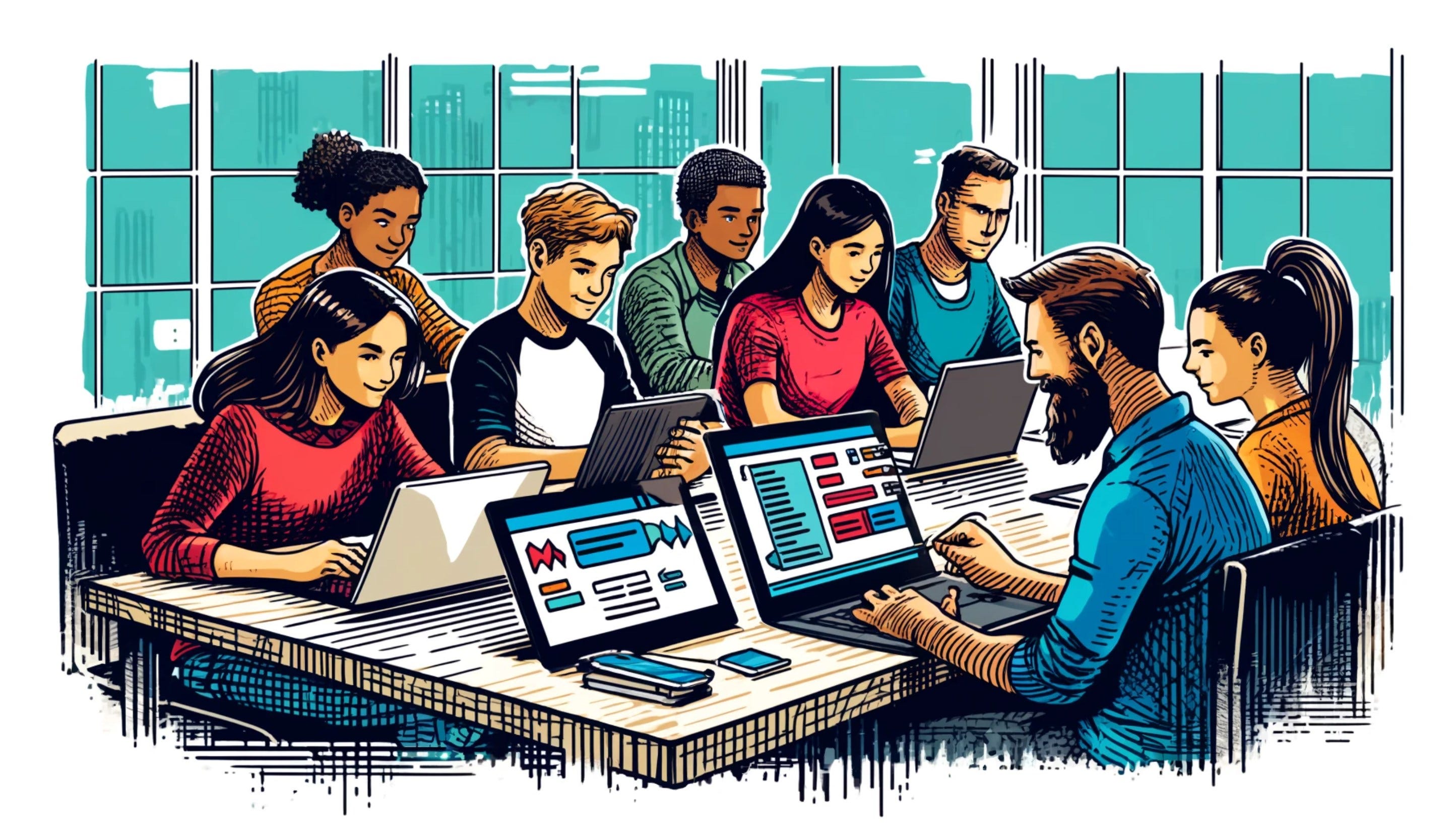
No-code tools are democratizing app development. This has led to the rise of so-called citizen developers. These non-technical subject matter experts build apps and automations by leveraging no-code platforms.
When it comes to no-code, we shouldn't only look at web and app builders like Bubble and Glide. It's important to remember that apart from the front-end builders, there's an entire set of tools around database management and automation.
Platforms like Zapier and Make allow non-technical people to build complex automation flows in a fraction of the time it would historically take to build such automations.
And while everyone talks about using no-code to build micro-SaaS apps, the real potential (and focus of most platforms) lies in building internal process management apps.
For example, take an accounting firm that has around 100 customers. Half of those don't want the firm to issue invoices for them and are taking care of this on their own to cut costs. That's all fine, but they use more than 30 different tools/Excel templates to issue their invoices. The accounting firm then has to manually book hundreds of monthly invoices that span so many different formats that there's no viable way to automate the process.
This is the reality for the accounting firm I am working with.
I am currently building an invoicing portal for them. All their customers can issue invoices from this portal for free, not having to keep track of Excel files or pay for another tool.
The benefit for the accounting firm is that all invoices will be stored in a central database from which they can easily import them into their accounting software.
Pretty neat, right?
Reason 2: Rapid Prototyping
Another great thing about the rise of no-code development tools is that they significantly lower the entry barrier when starting a business.
No-code tools have a clear advantage in allowing builders to quickly test and iterate ideas before committing time and resources, which is crucial for startups and entrepreneurs.
Traditionally, startup founders would either have to be software engineers or have the financial means to hire someone. A typical MVP (minimum viable product) would take them 6-12 months and cost a lot (especially if hiring developers). All this is only to get to a point where they can figure out how close they are to what users need. Pivoting and iterating would take even more time and money.
On the other hand, more and more founders nowadays prefer to build something quickly by leveraging no-code tools. You can build a SaaS MVP in a month using Bubble, and many simpler ones can be spun up over the weekend.
Especially if you are building a simple (from a technical standpoint) idea, you can keep it so much cheaper by using tools like Frontly or Softr and leveraging Google Sheets or Airtable as a database.
Here is where many people would argue that no-code is not as scalable as a custom solution, but I don't think that's a valid point when you're starting out. If the business picks up and you have paying clients, you can always hire a team and start rebuilding using code. And you don't have to do it all at once; you can gradually switch different components from no-code to code, starting from the least scalable ones.
Reason 3: Increased Productivity
If you ask me, perhaps the most significant benefit of no-code development tools lies in automating daily workflows.
Leveraging a tool like Make or Zapier, you can build the above-mentioned complex scenarios that perform mundane tasks for you.
For example, whenever I publish a new video on YouTube, I have a scenario that gets its details from an RSS feed. It then proceeds to generate social media posts for different platforms with OpenAI.
I have an app built in Frontly where I can see the generated posts, edit them, and mark them as approved. As soon as I approve the posts and click a button to Process All Approved Posts, another automation goes through all the approved posts and posts them to the relevant social media accounts alongside a link to the video on YouTube.
It doesn't sound like a huge deal, but it saves me about 30 minutes on every video I upload (which is once a week).
Add another 20 automations of routine, repetitive tasks, and you save 10+ hours, meaning you can relax or get more work done. It's a complete win-win if you ask me.
Reason 4: Scalability and Cost Efficiency
The main argument against no-code development is that it's not scalable or too costly to scale.
I honestly can't grasp why this is so important.
If you're just starting out building a startup, scalability is probably not something you need to focus on. First of all, most no-code platforms are actually quite scalable (at least those aimed towards external usage and not for building internal apps). Even if you're building the next Uber, you will have the time (and the resources) to rebuild your entire app once you prove product-market fit.
And, let's be honest, for 99% of apps, scalability will never be an issue. But no-code options allow us to build, fail, and iterate much faster.
The other con that gets thrown around a lot is that as they scale, no-code apps get very expensive to run because of the vendor lock-in. If your app scales that much, you can start rebuilding it with code piece by piece. However, if you scale that much, you can probably afford the costs associated with running your app.
Starting by building your MVP with no-code is simply more practical. You can build faster and cheaper, and you can always switch to custom solutions if needed.
Reason 5: Collaboration and Integration
Working with a no-code stack also comes with some collaborative benefits. Such tools are usually designed to be more intuitive and visual than traditional coding.
Now, that's pretty obvious. No-code platforms are aimed at non-technical builders (citizen developers), so they literally have to be user-friendly and straightforward to use.
Such platforms usually have great integration capabilities that allow seamless data transfer and manipulation between different services. This is where automation platforms like Make and Zapier often play the role of a backend while the no-code platforms take care of the front-end. There are some exceptions, but that's how a large part of no-code apps are built.
Additionally, no-code platforms often facilitate better stakeholder engagement and understanding by being much more visual and collaborative.

If you are curious to learn more about no-code after reading this, you can take a look at this video:
Anyway, suppose you have aspirations to build apps for the public, for your company, or for fun. In that case, I'd encourage you to explore and experiment with no-code tools.
Even if your app is a total flop, at least you'll save a ton of time.
That's all I have for you today. I hope you found some value in my musings around no-code.
Thanks for reading this far, and extra brownie points for those of you who share the newsletter with a friend or two.
Okay, I'll catch you next week!
Best,
Dobri 👋